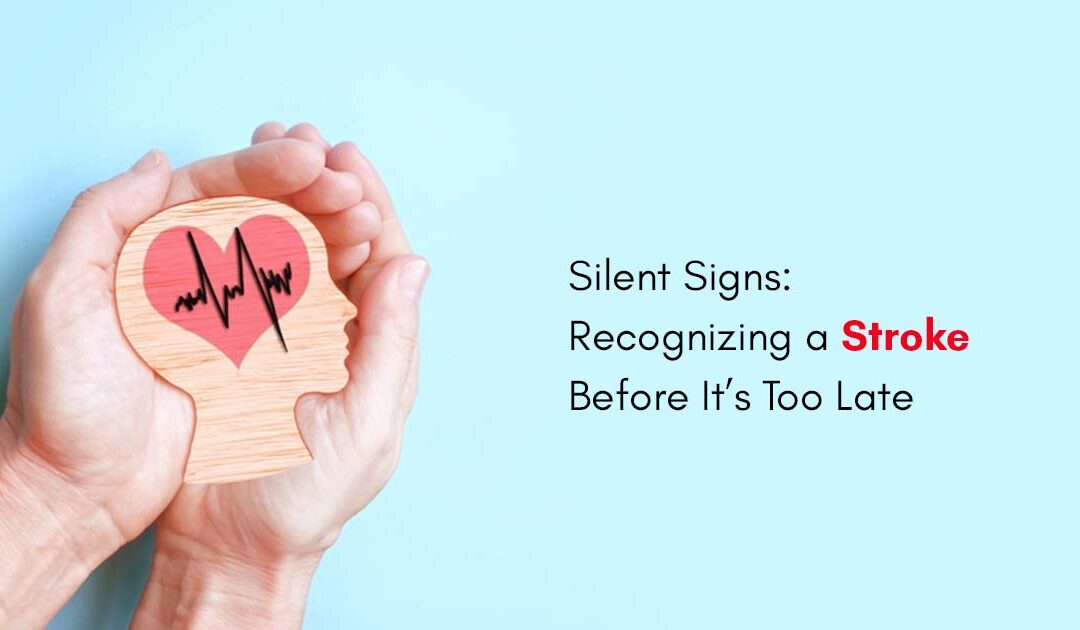
A stroke can happen out of the blue, often without any warning, and every minute matters. Often, people miss or misinterpret the warning signs of a stroke, causing delays that can cost precious time that likely saves brain function (and sometimes life) . Knowing and recognizing the silent symptoms and taking action within the first hour (sometimes referred to as the “Golden Hour”) is what can make the difference between recovery and permanent disability.
In this blog, we will help you understand how to identify the initial warning signs of a stroke, the importance of getting medical attention, and things to do if it occurs to you or someone you are with.
What is a Stroke?
A stroke occurs when the supply of blood to a part of the brain is suddenly interrupted, due to either blockage (ischemic stroke), or bleeding (hemorrhagic). Without oxygenated blood, brain cells begin to die within minutes, resulting in loss of movement, loss of speech, or loss of consciousness.
The sooner treatment begins, the more likely the amount of brain damage can be minimized. That is why stroke providers say that the first 60 minutes after a stroke is the “Golden hour.”
The Subtle Indicators of a Stroke
Stroke isn’t always associated with dramatic symptoms, such as sudden collapse. With many strokes, the onset is quiet, with indications that may be slight and easy to miss. Recognizing these early warning signs may mean the difference between life and death.
- Sudden weakness or numbness: A feeling of weakness and/or numbness in the face, arm, or leg – especially on one side of the body – is a classic warning sign.
- Trouble speaking or understanding: The person may slur their words, talk nonsensically, or have difficulty understanding even simple sentences
- Facial drooping: You can ask the person to smile – one side of the face may droop or not be as symmetrical.
- Sudden vision problems: Blurred, double, or lost vision in one or both eyes can indicate a stroke.
- Dizziness or loss of balance: Feeling unsteady, trouble walking, or sudden loss of coordination are all concerning.
- Severe headache: A sudden and severe headache, typically with no explanation – described by many people as “the worst headache ever”, could indicate a hemorrhagic stroke.
Why The First Hour Is So Important, The Golden Hour
When someone has a stroke, they lose an estimated 1.9 million brain cells for every minute the brain is deprived of oxygen. Acting quickly helps minimize brain cell damage and improves recovery outcomes.
Getting treatment in the first hour is the most effective time frame for using medication called tPA (tissue plasminogen activator) to remove the blood clot, reducing the oxygenated blood flow, therefore potentially preventing a disabling complication or significant complication.
For every minute of delay, even a few seconds that we wait, we lose the difference between full recovery and permanent disability.
What To Do If You Suspect Someone Is Having A Stroke
If anybody has one of any of the above symptoms, you need to act FAST:
F – Face: Ask them to smile! Does one side droop?
A – Arms: Ask them to raise both arms. Does one drift downward?
S – Speech: Ask them to repeat a simple phrase. Is it slurred or sounds strange?
T – Time: If any of these signs if you see them, call the emergency services immediately!
Do not wait until the symptoms have improved or disappeared. The longer we wait, the basic facts about strokes worsen, and early care could save lives.
Other important actions:
- Keep the affected person calm and seated
- Do not give the individual food, water, or medication
- Mark the time (when symptoms started); this is a vital source of information that will be considered for the emergency care medical teams when they arrive to develop a treatment plan
- If the person loses consciousness, check to see if they are breathing and check their pulse; if they are not, begin CPR.
What to Expect at the Hospital
Upon arrival at the emergency department, medical professionals will conduct rapid assessments such as:
- CT or MRI to determine the type of stroke
- Blood test to rule out anything else
- Blood pressure and heart rate monitoring
If the diagnosis is made soon enough, a clot-busting medication may be given to restore blood flow. Some worse-case scenarios may require surgical intervention to remove a clot or stop bleeding.
Time remains to be the biggest variable. Every second that passes means more damage to the brain.
Conclusion
A stroke is a medical emergency, and it is critically important to get treatment immediately. Knowing the silent warning signs, and acting in the Golden Hour could impact the difference between full recovery or permanent disability.
Know the symptoms, think FAST, and never hesitate to call for help. Quick action can not save a life – it can save a life of possibilities.