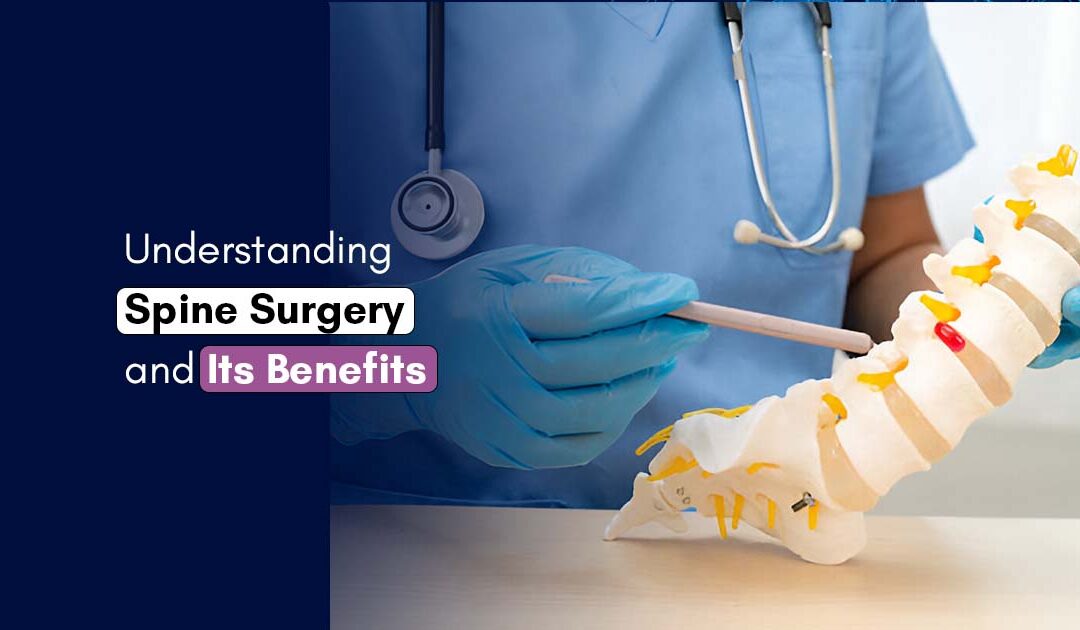
Your spine is part of your own body since it offers strength and stability to move. It is guarded by spinal bones or vertebrae. Any spine issue, therefore, has to be treated by a qualified surgeon. There are several minimally invasive treatments, such as pain injections, to treat minor conditions like pain or debilitating back syndromes. In case these issues are not treated, the surgeon may then suggest minimally invasive spine surgery.
Overview of Spinal Surgery
Spinal surgery is a broad term that covers a large number of different surgical procedures performed on the spine to repair a multitude of disorders. These disorders may:
- Herniated disc: a ruptured disc pressing on nerves.
- Spinal instability: instability or weakness of the spine.
- Spine deformity: abnormalities in the spine through shape or alignment.
- Spinal tumors: any tumor within the spine.
- Degenerative disc disease: the discs degenerate between vertebrae.
- Scoliosis: abnormal spinal curvature.
- Spinal stenosis: a narrowing of the spinal canal that pinches the nerves.
- Spinal infections: infections of the spine.
- Spinal fractures: fractures of vertebrae.
The physician may order a specific kind of surgery depending on the diagnosis and needs of the patient. The most prevalent kinds of spinal surgery are:
- Spinal instrumentation: This includes the placement of rods, screws, or plates to stabilize the spine.
- Vertebroplasty or Kyphoplasty: It is the injection of bone cement into a fractured vertebra to stabilize it.
- Spinal fusion: Two or more vertebrae are combined in this surgery to stabilize the spine.
- Discectomy: The excision of the herniated disc.
- Laminectomy: This involves the removal of a portion of the vertebral bone (lamina) to relieve pressure on nerves.
How Is Minimally Invasive Spine Surgery Different from Conventional Spine Surgery?
Traditional spine surgery is the complete opening of the anatomy to expose it, while minimally invasive spine surgery (MISS) operationally exposes less anatomy.
Another contrast between traditional and minimally invasive spine surgery is that the latter heals faster since it involves limited exposure. In minimally invasive spine surgery, intraoperative spinal navigation is also utilized as other surgical instrumentation, which provides the surgeon with better visibility into the surgical areas with limited exposure.
Regardless of whether it is traditional or minimally invasive, long-term objectives remain the same. It is still to gain overall improvement of symptoms or cessation of degeneration. The long-term objective is to have outcomes with less blood loss, shorter hospital stay, faster recovery, and less infection in the post-operative period.
Minimally invasive spine surgery has a less painful recovery than traditional. However, it must be remembered that not all patients or surgical conditions can be managed with minimally invasive surgery. You must ask your spine surgeon what is optimal for your case.
What are the Risk Factors of a Spinal Surgery?
Having an operation with a spinal intervention carries some risk, including:
- Infection
- Bleeding
- Nerve injury
- Blood Clots
- Failure of the surgery
- Need for additional surgery
When to See a Doctor?
If you experience any of the following, it may be an indicator that you will need spinal surgery:
- Severe chronic back pain
- Loss of bladder or bowel control
- Progressive weakness or numbness
- Spine deformity
- Ineffective conservative management, like pain injections
It is a good idea to talk over the pros and cons of spinal surgery with your physician before going with it. You may wish to:
- Your symptoms, if they become worse and do not improve
- Your doctor’s diagnosis of your case
- Your own choice before deciding on the surgery
You must explain all your options to your physician so you are aware of the advantages and disadvantages of the surgery recommended for your back.